

Tourist Information, Vendee History, Accommodation, Photos, Reviews, Maps,

Custom Search
Web |



|
| contact us | ||
| Advertise |
|
| month by month guide | ||
| Entertainment |
| January | ||
| February | ||
| March | ||
| April | ||
| May | ||
| June | ||
| July | ||
| August | ||
| September | ||
| October | ||
| November | ||
| December |
| Car Boot Sale | ||
| Discos |
|
| Getting About | ||
| Public Holidays, | ||
| Getting to the Vendee | ||
| Bike Hire | ||
| Photos | ||
| Weather | ||
| Vendee Wars | ||
| Videos | ||
| Maps & Books | ||
| Vendee Wines | ||
| Vendee Information |
|
| Vendee Restaurants | ||
| Coastal Region | ||
| Haut Bocage | ||
| Bas Bocage | ||
| Plaine | ||
| Sud Vendee | ||
| Marais Poitevin | ||
| Marais Breton | ||
| Marais Olonne |
|
| All Activities | ||
| fishing | ||
| sailing | ||
| golf | ||
| Walking | ||
| Cycling | ||
| Surfing | ||
| Karting | ||
| Swimming | ||
| Canoeing | ||
| Paintball | ||
| Horse Riding | ||
| Adventure Parks | ||
| Arts & Crafts |
|
| All Attractions | ||
| Theme Parks | ||
| Towns and Villages | ||
| Chateaux and Churches | ||
| beaches of the vendee | ||
| Adventure Parks | ||
| Amusement Parks | ||
| Water Parks | ||
| Childrens Attractions | ||
| Markets | ||
| Zoos & Gardens | ||
| Museums | ||
| Rivers of the Vendee | ||
| Vendee Islands | ||
| Vendee Wars Sites | ||
| Mills of the Vendee |
| inland beaches |
|
| Gites | ||
| Hotels | ||
| Camping | ||
| Bed & Breakfast |
| Gites with Pools | ||
| Gites Complex | ||
| All Gites |
| Camping Coastal Region | ||
| Camping Haut Bocage | ||
| Camping Marais Poitevin | ||
| Camping Sud Vendee |
|
| Coastal Region | ||
| Bas Bocage | ||
| Haut Bocage | ||
| Plaine | ||
| Sud Vendee | ||
| Marais Poitevin | ||
| Marais Breton | ||
| Marais Olonne | ||
| Mervent Forest |
In
accordance with the law "and Freedoms" of January 6, 1978, you have the
right to access and rectify information concerning you. If you wish to
exercise this right, please contact us.
© Copyright Vendee-Guide.co.uk 2009-12
© Copyright Vendee-Guide.co.uk 2009-12





The Coast and Islands of the Vendée
Vendee Coast Photos
Attractions Coastal Region
Restaurants coastal region
Camping Coastal Region
Activities
Attractions Coastal Region
Restaurants coastal region
Camping Coastal Region
Activities
The Vendée
coast or "Le Littoral" as the French call it encompasses approximately
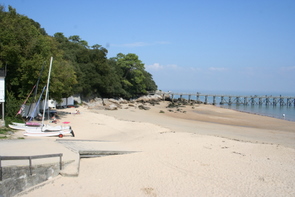
200 kilometres of coastline. About 140 kilometres of this are fine sandy beaches
which slope gently in to the Atlantic Ocean. The beautiful Vendéen
coast, the mild micro climate which produces one of the sunniest
climates in France and the clear blue Atlantic make the Vendee a
favourite holiday destination, not only for the French but for the
thousands who flock here each year from around the world. All along the
coast there are relaxing holiday resorts which cater for the needs of
the holiday maker, they have all the latest facilities and
entertainments that are essential for a great seaside holiday. The
Vendéen coast is however not just strewn with purpose built holiday
resorts, it is also a working coast and there are picturesque fishing
ports, full of life and interest, where all manner of fish are landed.
There are also many areas of shellfish farming and there are many ports
where mussels and oysters are brought in and it is possible to buy them
from the quayside. At low spring tides the causeway to Noirmoutier from
mainland France “Le Passage du Gois”
gives access to a huge area of sand allowing hundreds of cars to park
on the sands on either side of the causeway and thousands of people to
pick shellfish of all kinds. There are also modern marina ports and
quiet coastal communities, all offering different types of accommodation
and life styles.
In the Vendée the long stretches of sandy beaches, most of which are awarded the blue flag for cleanliness, are invariably backed by large sand dunes. These were planted in the 19th century with forests of pine trees, although Holm Oaks were also planted. This planting has stabilised the coastline and allowed its development.
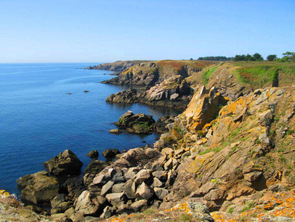
The coast is not all sandy beaches, to the north along the coast of the Baie de Bourgneuf the Marais Breton is guarded by a large stone digue (dike) outside of which are mudflats the territory of birds and oyster farmers. The same is true in the south where earthen Digues were built in the late 18th century; these protect the Marais Poitevin from Flooding. Elsewhere there are stretches of low cliffs with sandy beaches and small coves especially from Sion-sur-l'Océan to the mouth of the River Vie at St. Gilles Croix de Vie and from just south of Les Sables d'Olonne to Le Rocher in the commune of Longville-sur-Mer.
Behind the dunes there are the areas of marshland which were drained by the Benedictine monks in the Middle Ages. These wetlands now divide the coastal zone from the Bocage and Plaine.
The Islands.
The Ile-de Noirmoutier, at the very northern tip of the Vendée is the last remaining island of the Marais Breton; it can be reached either by the bridge from Fromentine to La Fosse or by the Passage du Gois a 4.5 kilometre causeway that is passable only at low tide. This causeway starts at Bellevue near Beauvoir-sur-Mer arriving at Barbatre and runs some 4 kilometres north of the bridge.
This low lying island, its highest point being just 13m above sea level, has all the landscape characteristics of mainland Vendée with glorious sandy beaches from South to the north on the western side and low rocky cliffs with small sandy coves around the north and north east. The island is nearly cut in two by the marshes and the south east has mudflats.
The main industries of the island are; fishing, farming, salt production and tourism. The island has a large fleet of modern boats working out of l'Herbaudière, and the Noirmoutier early potatoes are renowned throughout France. The production of Salt is declining in volume, but it is still produced to the highest quality and is a staple all over France. Tourism is also key to the island’s financial survival, with the island boasting everything that the mainland coast has to offer but on a smaller scale, In the summer season visitors flock here to take in the sun and soak up the atmosphere that is as always so much a part of island life.
The Ile d'Yeu. Lying some ten miles off the coast from Notre dame de Monts is truly an island with character. A picture postcard island of raw natural beauty, populated by low whitewashed cottages with brightly painted shutters it has pretty fishing ports nestling in amongst the dramatically rugged cliffs. To reach the island you take the ferry from Fromentine which runs all year round, or from St. Gilles croix de Vie during the summer season, it is also possible to fly by helicopter from La Barre-de-Monts. As with Ile-de-Noirmoutier the landscape is a microcosm of the mainland, though the cliffs are taller and more dramatic, the marshes are smaller as are the beaches that are nonetheless backed with pine forests just like the mainland
.
The port of Joinville is the largest town on the island and is the centre of the tourist trade, it also has a large and important fishing harbour and a sizable marina. Virtually all the Hotels and restaurants are located in or near the town as are the rental shops for bicycles and cars.
Walking and cycling are the best ways to see this very attractive island and the routes are well marked, there are guides and maps available for these routes which take one through some of the most breathtaking scenery in the Vendée.
Sports
The ideal prevailing winds, together with the sand and sunshine combine to make the Vendéen coast the perfect venue for all manner of aquatic sports. Whether you want to partake in; long board, short board, body board or kite surfing you will find a place to suit your needs, If sailing is your forte no matter whether it is simple leisure sailing or the more strenuous and competitive genre you will find it available on the Vendéen coast, For those who enjoy fishing all manner of sea fishing is available from deep sea fishing to beach-casting.
Equipment for all sports is available for hire and you can get professional advice and guidance from the numerous schools for different sports all along the coast.
Aside from the nautical sports there are a plethora of other activities from karting to horse-riding, fitness circuits to beach sports, all are well catered for.
Eating out
Looking after the inner self is always part of the Holiday and eating out is exceptionally well catered for with every conceivable form of eatery. As one would expect Restaurants specialising in locally caught or produced seafood are plentiful, in particular the locally produced moules (mussels) and Huîtres (oysters). If fish is not for you there are Pizza restaurants and many other restaurants that cater for those who prefer a more carnivorous menu.
In the Vendée the long stretches of sandy beaches, most of which are awarded the blue flag for cleanliness, are invariably backed by large sand dunes. These were planted in the 19th century with forests of pine trees, although Holm Oaks were also planted. This planting has stabilised the coastline and allowed its development.
The coast is not all sandy beaches, to the north along the coast of the Baie de Bourgneuf the Marais Breton is guarded by a large stone digue (dike) outside of which are mudflats the territory of birds and oyster farmers. The same is true in the south where earthen Digues were built in the late 18th century; these protect the Marais Poitevin from Flooding. Elsewhere there are stretches of low cliffs with sandy beaches and small coves especially from Sion-sur-l'Océan to the mouth of the River Vie at St. Gilles Croix de Vie and from just south of Les Sables d'Olonne to Le Rocher in the commune of Longville-sur-Mer.
Behind the dunes there are the areas of marshland which were drained by the Benedictine monks in the Middle Ages. These wetlands now divide the coastal zone from the Bocage and Plaine.
The Islands.
The Ile-de Noirmoutier, at the very northern tip of the Vendée is the last remaining island of the Marais Breton; it can be reached either by the bridge from Fromentine to La Fosse or by the Passage du Gois a 4.5 kilometre causeway that is passable only at low tide. This causeway starts at Bellevue near Beauvoir-sur-Mer arriving at Barbatre and runs some 4 kilometres north of the bridge.
This low lying island, its highest point being just 13m above sea level, has all the landscape characteristics of mainland Vendée with glorious sandy beaches from South to the north on the western side and low rocky cliffs with small sandy coves around the north and north east. The island is nearly cut in two by the marshes and the south east has mudflats.
The main industries of the island are; fishing, farming, salt production and tourism. The island has a large fleet of modern boats working out of l'Herbaudière, and the Noirmoutier early potatoes are renowned throughout France. The production of Salt is declining in volume, but it is still produced to the highest quality and is a staple all over France. Tourism is also key to the island’s financial survival, with the island boasting everything that the mainland coast has to offer but on a smaller scale, In the summer season visitors flock here to take in the sun and soak up the atmosphere that is as always so much a part of island life.
The Ile d'Yeu. Lying some ten miles off the coast from Notre dame de Monts is truly an island with character. A picture postcard island of raw natural beauty, populated by low whitewashed cottages with brightly painted shutters it has pretty fishing ports nestling in amongst the dramatically rugged cliffs. To reach the island you take the ferry from Fromentine which runs all year round, or from St. Gilles croix de Vie during the summer season, it is also possible to fly by helicopter from La Barre-de-Monts. As with Ile-de-Noirmoutier the landscape is a microcosm of the mainland, though the cliffs are taller and more dramatic, the marshes are smaller as are the beaches that are nonetheless backed with pine forests just like the mainland
.
The port of Joinville is the largest town on the island and is the centre of the tourist trade, it also has a large and important fishing harbour and a sizable marina. Virtually all the Hotels and restaurants are located in or near the town as are the rental shops for bicycles and cars.
Walking and cycling are the best ways to see this very attractive island and the routes are well marked, there are guides and maps available for these routes which take one through some of the most breathtaking scenery in the Vendée.
Sports
The ideal prevailing winds, together with the sand and sunshine combine to make the Vendéen coast the perfect venue for all manner of aquatic sports. Whether you want to partake in; long board, short board, body board or kite surfing you will find a place to suit your needs, If sailing is your forte no matter whether it is simple leisure sailing or the more strenuous and competitive genre you will find it available on the Vendéen coast, For those who enjoy fishing all manner of sea fishing is available from deep sea fishing to beach-casting.
Equipment for all sports is available for hire and you can get professional advice and guidance from the numerous schools for different sports all along the coast.
Aside from the nautical sports there are a plethora of other activities from karting to horse-riding, fitness circuits to beach sports, all are well catered for.
Eating out
Looking after the inner self is always part of the Holiday and eating out is exceptionally well catered for with every conceivable form of eatery. As one would expect Restaurants specialising in locally caught or produced seafood are plentiful, in particular the locally produced moules (mussels) and Huîtres (oysters). If fish is not for you there are Pizza restaurants and many other restaurants that cater for those who prefer a more carnivorous menu.

Towns & Villages in the Coast
Beaches of the Vendee
Angles
l'Aiguillon-sur-Mer
Beauvoir-sur-Mer
Brem sur Mer
Bretignolles-sur-mer
La Chaume
La Faute-sur-Mer
Fromentine/Barre-de-Mont
Jard-sur-Mer
Longville-sur-Mer
Notre Dame-de-Monts
Olonne-sur-Mer
Port Bourgenay
Port du Bec
Port Joinville
Port du la Meule
St.Vincent-sur-Jard
Les Sables-d'Olonne
St.Gilles-Croix-de-Vie
St.Hilaire-de-Riez
St Jean de Monts
Sion-sur-l'Ocean
La Tranche-sur-Mer
l'Aiguillon-sur-Mer
Beauvoir-sur-Mer
Brem sur Mer
Bretignolles-sur-mer
La Chaume
La Faute-sur-Mer
Fromentine/Barre-de-Mont
Jard-sur-Mer
Longville-sur-Mer
Notre Dame-de-Monts
Olonne-sur-Mer
Port Bourgenay
Port du Bec
Port Joinville
Port du la Meule
St.Vincent-sur-Jard
Les Sables-d'Olonne
St.Gilles-Croix-de-Vie
St.Hilaire-de-Riez
St Jean de Monts
Sion-sur-l'Ocean
La Tranche-sur-Mer
The pointe du l'Aiguillon l'Aiguillon-sur-Mer
La Faute-sur-Mer La Tranche-sur-Mer
La Terrier Les Conches
La Rocher Longville-sur-Mer
St Vincent-sur-Jard Jard-sur-Mer
Pointe du Payre Plage du Veillon
Port Bourgenay La Tanchet
Les Sable d'Olonne La Chaume
Plage de l'Aubraie Sauveterre
Plages des Granges Brem-sur-Mer
Bretignollies-sur-Mer Plage du Jaunay
St.Gilles-Croix-de-Vie Sion-sur-l'Ocean
Plages de Riez Plage Paree-Preneau
Plage-de-la Pege Les Mouettes
Le Grande Bec le Petite Bec.
Plages des Soixante Borne. St.Jean-de-Monts
Plages de la Paree de Jonc. Plage de la Tonnelle.
Notre-Dame-de-Monts Le Barre de Monts
Ile de Noirmourtier Ile d'Yeu.
Naturiste Beaches
La Faute-sur-Mer La Tranche-sur-Mer
La Terrier Les Conches
La Rocher Longville-sur-Mer
St Vincent-sur-Jard Jard-sur-Mer
Pointe du Payre Plage du Veillon
Port Bourgenay La Tanchet
Les Sable d'Olonne La Chaume
Plage de l'Aubraie Sauveterre
Plages des Granges Brem-sur-Mer
Bretignollies-sur-Mer Plage du Jaunay
St.Gilles-Croix-de-Vie Sion-sur-l'Ocean
Plages de Riez Plage Paree-Preneau
Plage-de-la Pege Les Mouettes
Le Grande Bec le Petite Bec.
Plages des Soixante Borne. St.Jean-de-Monts
Plages de la Paree de Jonc. Plage de la Tonnelle.
Notre-Dame-de-Monts Le Barre de Monts
Ile de Noirmourtier Ile d'Yeu.
Naturiste Beaches