

Tourist Information, Vendee History, Accommodation, Photos, Reviews, Maps,

Custom Search
Web |



|
| contact us | ||
| Advertise |
|
| month by month guide | ||
| Entertainment |
| January | ||
| February | ||
| March | ||
| April | ||
| May | ||
| June | ||
| July | ||
| August | ||
| September | ||
| October | ||
| November | ||
| December |
| Car Boot Sale | ||
| Discos |
|
| Getting About | ||
| Public Holidays, | ||
| Getting to the Vendee | ||
| Bike Hire | ||
| Photos | ||
| Weather | ||
| Vendee Wars | ||
| Videos | ||
| Maps & Books | ||
| Vendee Wines | ||
| Vendee Information |
|
| Vendee Restaurants | ||
| Coastal Region | ||
| Haut Bocage | ||
| Bas Bocage | ||
| Plaine | ||
| Sud Vendee | ||
| Marais Poitevin | ||
| Marais Breton | ||
| Marais Olonne |
|
| All Activities | ||
| fishing | ||
| sailing | ||
| golf | ||
| Walking | ||
| Cycling | ||
| Surfing | ||
| Karting | ||
| Swimming | ||
| Canoeing | ||
| Paintball | ||
| Horse Riding | ||
| Adventure Parks | ||
| Arts & Crafts |
|
| All Attractions | ||
| Theme Parks | ||
| Towns and Villages | ||
| Chateaux and Churches | ||
| beaches of the vendee | ||
| Adventure Parks | ||
| Amusement Parks | ||
| Water Parks | ||
| Childrens Attractions | ||
| Markets | ||
| Zoos & Gardens | ||
| Museums | ||
| Rivers of the Vendee | ||
| Vendee Islands | ||
| Vendee Wars Sites | ||
| Mills of the Vendee |
| inland beaches |
|
| Gites | ||
| Hotels | ||
| Camping | ||
| Bed & Breakfast |
| Gites with Pools | ||
| Gites Complex | ||
| All Gites |
| Camping Coastal Region | ||
| Camping Haut Bocage | ||
| Camping Marais Poitevin | ||
| Camping Sud Vendee |
|
| Coastal Region | ||
| Bas Bocage | ||
| Haut Bocage | ||
| Plaine | ||
| Sud Vendee | ||
| Marais Poitevin | ||
| Marais Breton | ||
| Marais Olonne | ||
| Mervent Forest |




Marais-Breton-Vendéen
Marais Breton Photos
Marais Breton Restaurants
Camping in the Marais Breton
Attractions Marais Breton
Activities
Accommodation
Marais Breton Restaurants
Camping in the Marais Breton
Attractions Marais Breton
Activities
Accommodation
The Marais
Breton,now officially called the Marais-Breton-Vendéen, is an area of
marshland which covers some 45,000 hectares, and is probably the least
known yet best preserved wetland in France. It bridges the Departments
of the Vendée and the Loire-Atlantique, and runs from Moutiers-en-Retz
to St.Gilles-Croix-de-Vie on the coast and Machecoul to Challans inland.
The Marais Breton is part of the ancient Bay of Brittany which was once speckled with islands, however today the Ile de Noirmoutier is the only remaining island. Bouin, Beauvoir and Sallertaine were at one time islands but due to sedimentary deposits by the coastal currents from the Loire and the Charente and the many smaller rivers that flow in the Atlantic, they have now become a part of the mainland. The first drainage ditches in the marshes were dug by the Romans as early as the 1st century and these were expanded upon by the Benedictine monks from the X1 to X111 centuries. In the Middle-Ages the Marais Breton was known for (its) the production of salt and from the 15th to 18th century up to 30,000 tons per year were produced, with the trade being centred on Bouin and Bourgneuf. Production gradually decreased as the bay silted up and eventually died out with the trade moving to the Mediterranean. Recently the area has seen a resurgence in the production of salt, predominantly on the Ile-Noirmoutier, this is due on the one hand to the tourist interest, but and on the other due to the quality of the salt produced.
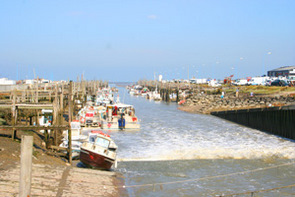
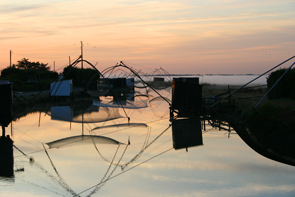
As a result of building the digues (dikes) along the coast and the Étiers, the canals that control and allow sea water to enter the marshes oyster farming is now prolific and has become a major contributor to the local economy. Oyster farming occurs all along the coast but is particularly concentrated in the area between the recently modernised port of Les Bouchets and the picturesque Port du Bec (Chinese port). At many of the oyster farms one may taste and buy the oysters and at the ports there are shops and markets that supply not only oysters but other marine delicacies, regional products and the obligatory souvenirs. Offshore Mussel farms in the Baie du Bourgneuf and fishing, especially for crab and lobster, are also important local industries.
The Marais Breton has one of the best preserved ecological systems in France attracting a plethora of migratory birds and is also home to a variety of rare and varied Flora and Fauna. It is without doubt a nature lovers paradise, and is a place where even in the peak of the holiday season one can find solitude and tranquillity.
Throughout the Marais-Breton-Vendéen there are well signposted and excellently maintained routes for cycling and walking and are the best way to discover and enjoy this natural environment which is as incredible as it is beautiful. Along the way signs and information posts direct one to the different places of interest and give information on the nature of the particular area. A list of the various walks and cycle paths can be obtained from the local tourist office along with information on the length of the route, the estimated time it will take to complete it and the important points of interest along the way. A word of caution though, go prepared, the marshland is exposed and there are few places to get refreshment, so taking plenty of water and protection from the sun is essential as the temperatures can be really fierce during the summer. The Guide would also recommend that one carries a repair kit for your bicycle and a mobile phone in case of emergencies. For those who are less mobile or who have less time, it is possible to explore the marshes by car or motor bike.
There are many routes that will take you through almost deserted countryside and enable you discover those marshland villages and ports, take in the oyster farms along the coast and see the natural beauty of the Marais-Breton-Vendéen.
The inhabitants of the marshes (maraichian) have over the years struggled against adversity. As well as having the elements to wrestle with along with the harsh environment, the maraichan have been involved in many conflicts. After the Romans left the area was fought over by many opposing factions including the Vikings and the Normans. This was followed by the 100 years wars with the English, the war of Religions and then finally the uprisings of the Wars of the Vendée.
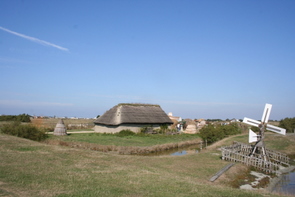
Eco Musee Daviaud. This popular museum is dedicated to the History, workings and life of the Marais-Breton-Vendéen and should be on anyone’s list of must see attractions if they have any interest in this unique region.
Kulmino. This water tower in the middle of the Marais-Breton-Vendéen has an exhibition on the cycle of water and its importance, it is possible to go to the top of the tower where one can get a panoramic view of the Marais, the Island of Noirmoutier, the Baie de Bourgneuf and in the far distance and on a clear day the Ile d'Yeu.
Bike Hire Marais Breton;
La Barre de Monts: La Barre a Roues, 161, Ave Estacade. Tel.02 51 39 22 50.
Beauvoir-sur-Mer: Marais Prom'nade, La Canardiere. Tel. 06 14 01 67 78.
Notre-Dame-de-Monts. CyclLove Evasion. Tel. 02 51 58 43 86.
St.Jean-de-Monts: Barreau. 6,Ave Foret. Tel. 09 63 54 61 49.
Cycl'love. 11,Ave Demoiselles Tel.02 51 59 04 31.
Le Cycl'hop. 6,Ave Foret. Tel. 02 51 58 04 81.
Maheau Philippe. 9, Ave Gen. De Gauille. Tel. 02 51 58 27 83.
Bloobike Tel.06 22 60 53 21.
Canoeing Marais Breton;
Sallertaine. 49 rue de Verdun.
P.I.N.T.A. La Route du Sel Tel 02 51 93 03 40
Next to the bridge and also a shop in the village.
Challans P.I.N.T.A. 21, rue Gambetta. Tel. 02 51 49 22 17.
Bois-de-Cene. P.I.N.T.A. La Cour Tel 02 51 49 22 17.
Le Perrier. Promenade en Yoles 06 86 06 01 52
The Marais Breton is part of the ancient Bay of Brittany which was once speckled with islands, however today the Ile de Noirmoutier is the only remaining island. Bouin, Beauvoir and Sallertaine were at one time islands but due to sedimentary deposits by the coastal currents from the Loire and the Charente and the many smaller rivers that flow in the Atlantic, they have now become a part of the mainland. The first drainage ditches in the marshes were dug by the Romans as early as the 1st century and these were expanded upon by the Benedictine monks from the X1 to X111 centuries. In the Middle-Ages the Marais Breton was known for (its) the production of salt and from the 15th to 18th century up to 30,000 tons per year were produced, with the trade being centred on Bouin and Bourgneuf. Production gradually decreased as the bay silted up and eventually died out with the trade moving to the Mediterranean. Recently the area has seen a resurgence in the production of salt, predominantly on the Ile-Noirmoutier, this is due on the one hand to the tourist interest, but and on the other due to the quality of the salt produced.
As a result of building the digues (dikes) along the coast and the Étiers, the canals that control and allow sea water to enter the marshes oyster farming is now prolific and has become a major contributor to the local economy. Oyster farming occurs all along the coast but is particularly concentrated in the area between the recently modernised port of Les Bouchets and the picturesque Port du Bec (Chinese port). At many of the oyster farms one may taste and buy the oysters and at the ports there are shops and markets that supply not only oysters but other marine delicacies, regional products and the obligatory souvenirs. Offshore Mussel farms in the Baie du Bourgneuf and fishing, especially for crab and lobster, are also important local industries.
The Marais Breton has one of the best preserved ecological systems in France attracting a plethora of migratory birds and is also home to a variety of rare and varied Flora and Fauna. It is without doubt a nature lovers paradise, and is a place where even in the peak of the holiday season one can find solitude and tranquillity.
Throughout the Marais-Breton-Vendéen there are well signposted and excellently maintained routes for cycling and walking and are the best way to discover and enjoy this natural environment which is as incredible as it is beautiful. Along the way signs and information posts direct one to the different places of interest and give information on the nature of the particular area. A list of the various walks and cycle paths can be obtained from the local tourist office along with information on the length of the route, the estimated time it will take to complete it and the important points of interest along the way. A word of caution though, go prepared, the marshland is exposed and there are few places to get refreshment, so taking plenty of water and protection from the sun is essential as the temperatures can be really fierce during the summer. The Guide would also recommend that one carries a repair kit for your bicycle and a mobile phone in case of emergencies. For those who are less mobile or who have less time, it is possible to explore the marshes by car or motor bike.
There are many routes that will take you through almost deserted countryside and enable you discover those marshland villages and ports, take in the oyster farms along the coast and see the natural beauty of the Marais-Breton-Vendéen.
The inhabitants of the marshes (maraichian) have over the years struggled against adversity. As well as having the elements to wrestle with along with the harsh environment, the maraichan have been involved in many conflicts. After the Romans left the area was fought over by many opposing factions including the Vikings and the Normans. This was followed by the 100 years wars with the English, the war of Religions and then finally the uprisings of the Wars of the Vendée.
Eco Musee Daviaud. This popular museum is dedicated to the History, workings and life of the Marais-Breton-Vendéen and should be on anyone’s list of must see attractions if they have any interest in this unique region.
Kulmino. This water tower in the middle of the Marais-Breton-Vendéen has an exhibition on the cycle of water and its importance, it is possible to go to the top of the tower where one can get a panoramic view of the Marais, the Island of Noirmoutier, the Baie de Bourgneuf and in the far distance and on a clear day the Ile d'Yeu.
Bike Hire Marais Breton;
La Barre de Monts: La Barre a Roues, 161, Ave Estacade. Tel.02 51 39 22 50.
Beauvoir-sur-Mer: Marais Prom'nade, La Canardiere. Tel. 06 14 01 67 78.
Notre-Dame-de-Monts. CyclLove Evasion. Tel. 02 51 58 43 86.
St.Jean-de-Monts: Barreau. 6,Ave Foret. Tel. 09 63 54 61 49.
Cycl'love. 11,Ave Demoiselles Tel.02 51 59 04 31.
Le Cycl'hop. 6,Ave Foret. Tel. 02 51 58 04 81.
Maheau Philippe. 9, Ave Gen. De Gauille. Tel. 02 51 58 27 83.
Bloobike Tel.06 22 60 53 21.
Canoeing Marais Breton;
Sallertaine. 49 rue de Verdun.
P.I.N.T.A. La Route du Sel Tel 02 51 93 03 40
Next to the bridge and also a shop in the village.
Challans P.I.N.T.A. 21, rue Gambetta. Tel. 02 51 49 22 17.
Bois-de-Cene. P.I.N.T.A. La Cour Tel 02 51 49 22 17.
Le Perrier. Promenade en Yoles 06 86 06 01 52
Towns & Villages in the Marais Breton
In
accordance with the law "and Freedoms" of January 6, 1978, you have the
right to access and rectify information concerning you. If you wish to
exercise this right, please contact us.
© Copyright Vendee-Guide.co.uk 2009-12 This Website is built with Bluevoda from Vodahost
© Copyright Vendee-Guide.co.uk 2009-12 This Website is built with Bluevoda from Vodahost