
Tourist Information, Vendee History, Accommodation, Photos, Reviews, Maps,

Custom Search
Web |



|
| contact us | ||
| Advertise |
|
| month by month guide | ||
| Entertainment |
| January | ||
| February | ||
| March | ||
| April | ||
| May | ||
| June | ||
| July | ||
| August | ||
| September | ||
| October | ||
| November | ||
| December |
| Car Boot Sale | ||
| Discos |
|
| Getting About | ||
| Public Holidays, | ||
| Getting to the Vendee | ||
| Bike Hire | ||
| Photos | ||
| Weather | ||
| Vendee Wars | ||
| Videos | ||
| Maps & Books | ||
| Vendee Wines | ||
| Vendee Information |
|
| Vendee Restaurants | ||
| Coastal Region | ||
| Haut Bocage | ||
| Bas Bocage | ||
| Plaine | ||
| Sud Vendee | ||
| Marais Poitevin | ||
| Marais Breton | ||
| Marais Olonne |
|
| All Activities | ||
| fishing | ||
| sailing | ||
| golf | ||
| Walking | ||
| Cycling | ||
| Surfing | ||
| Karting | ||
| Swimming | ||
| Canoeing | ||
| Paintball | ||
| Horse Riding | ||
| Adventure Parks | ||
| Arts & Crafts |
|
| All Attractions | ||
| Theme Parks | ||
| Towns and Villages | ||
| Chateaux and Churches | ||
| beaches of the vendee | ||
| Adventure Parks | ||
| Amusement Parks | ||
| Water Parks | ||
| Childrens Attractions | ||
| Markets | ||
| Zoos & Gardens | ||
| Museums | ||
| Rivers of the Vendee | ||
| Vendee Islands | ||
| Vendee Wars Sites | ||
| Mills of the Vendee |
| inland beaches |
|
| Gites | ||
| Hotels | ||
| Camping | ||
| Bed & Breakfast |
| Gites with Pools | ||
| Gites Complex | ||
| All Gites |
| Camping Coastal Region | ||
| Camping Haut Bocage | ||
| Camping Marais Poitevin | ||
| Camping Sud Vendee |
|
| Coastal Region | ||
| Bas Bocage | ||
| Haut Bocage | ||
| Plaine | ||
| Sud Vendee | ||
| Marais Poitevin | ||
| Marais Breton | ||
| Marais Olonne | ||
| Mervent Forest |
Brem-sur-Mer
Formerly a
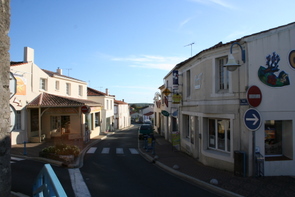
port Brem-sur-Mer now finds itself a few kilometres inland. There has
been civilisation here for more than 5000 years as testified by the
numerous Mehirs and Dolmens that can be found nearby. The town of today
is in fact the combination of the two old communes of
Saint-Martin-de-Brem and Saint-Nicolas-de-Brem. St Nicolas-de Brem was
created in the 9th century due to the continual invasion of their port
at la Gachère, the church was founded in the 11th century. In the 12th
century a new village of St.Martin-de Brem was formed which quickly
developed.
Vines were introduced into the Brem region by the Romans who came to buy salt from the nearby salt marshes of Olonne. The viticulture was further developed by the monks from the 11th century and later by Cardinal Richelieu, the then bishop of Luçon. He liked the wines of Brem so much that he called them "nobility", and the legacy of that is that today the wines of Brem are sold under the title of "Fiefs de la Cardinal"
Brem wines are produced from the following grapes, Chenin, Chardonnay, Sauvignon Grolleau Gris, Gamay, Cabernet and Pinot Noir. These wines are clear, (and) cool and fruity, often with a slight aroma of apple. The wines are pleasant to drink when young. They are labelled Designation of Origin (AOC).
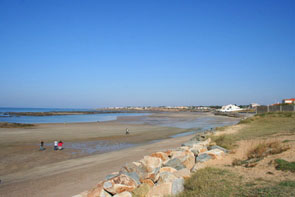
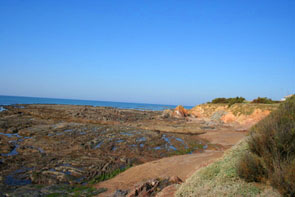
Beaches. Brem-sur-Mer is a well known beach resort though the beaches are several kilometers from the town. To the north the coast line is rocky with small sandy coves, but as you head south there are large streches of fine sany beach which terminate at beaches of Des Granges.
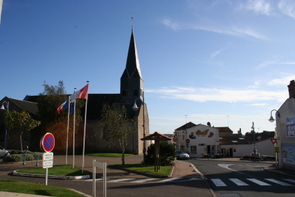
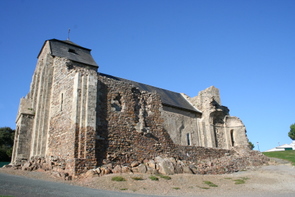
Eglise St Nicolas-de Brem This 11th century church, once a part of a Benedictine Priory, is one of the oldest in the Vendée although it is now mainly in ruins. Destroyed by Protestants during the wars of religion, only the centre nave remains of the three originals and this opens onto the choir with gothic piscina and half domed apse. The carved facade over the west porch is claimed to be a statue of St.Nicholas, the austier and the whitewashed interior has some 12th century frescos which were discovered below many layers of paint in 1980.
Behind the church is a mound, that it all that is left of a medieval castle that once stood there and was a defence fortress against invading pirates and Normans. Photos of the Church
Parc des Dunes. The Parc des Dunes at Brem-sur-Mer is one of the biggest fun parks in the Vendée. With over forty attractions spread over three hectares there is something for all the Family.
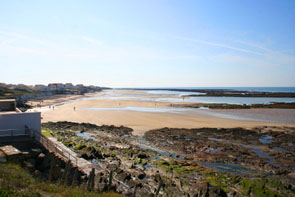
Havre de la Gachere. This is the original harbour of Brem and the small community that still remains is quaint and attractive with the narrow streets and low whitewashed houses, so typical of the seafaring villages of the area. At the mouth of the Auzance and Vertonne rivers this ancient port was active until the 16th century when it silted up and was abandoned, and the river mouth is now dammed to control the waters of the Marais. The nearby beaches des Granges are some of the finest in the Vendée and attract many visitors not only in the summer but all year round.
In addition to the great beaches and dunes the area is exceptional for fishing offering many opportunities here for fishing enthusiasts of both salt and fresh water. The area also attracts surfers, nature lovers, sunbathers and walkers , and has a warm and friendly family atmosphere.
Photos of la Gachere
Restaurants; La Papa. 33,rue Ocean. Tel. 02 51 90 91 87.
O Fournil. 32 Rue de l'Ocean.
Snack 59. 1,rue du General de Gaulle.
Camping; Camping du Brandais. Rue Sablais. Tel. 02 51 90 55 87.
Camping du Chaponnet. Rue Chaponnet. Tel. 02 51 90 55 56.
Camping du Littoral. 17, rue Brandais. Tel. 02 51 90 92 76.
Camping l'Ocean. Rue Gabelous Tel.02 51 90 59 16.
Jardin des Iles. 58 rue Ocean Tel. 02 51 90 50 52.
Bike Hire; PSL Bike, 23, Ocean. Tel 02 44 10 00 50.
Taxis; Taxis Moquet Rene, 22, rue Mai 1945. Tel. 02 51 90 51 53.
Return to find more interesting towns and villages in the Vendee
Vines were introduced into the Brem region by the Romans who came to buy salt from the nearby salt marshes of Olonne. The viticulture was further developed by the monks from the 11th century and later by Cardinal Richelieu, the then bishop of Luçon. He liked the wines of Brem so much that he called them "nobility", and the legacy of that is that today the wines of Brem are sold under the title of "Fiefs de la Cardinal"
Brem wines are produced from the following grapes, Chenin, Chardonnay, Sauvignon Grolleau Gris, Gamay, Cabernet and Pinot Noir. These wines are clear, (and) cool and fruity, often with a slight aroma of apple. The wines are pleasant to drink when young. They are labelled Designation of Origin (AOC).
Beaches. Brem-sur-Mer is a well known beach resort though the beaches are several kilometers from the town. To the north the coast line is rocky with small sandy coves, but as you head south there are large streches of fine sany beach which terminate at beaches of Des Granges.
Eglise St Nicolas-de Brem This 11th century church, once a part of a Benedictine Priory, is one of the oldest in the Vendée although it is now mainly in ruins. Destroyed by Protestants during the wars of religion, only the centre nave remains of the three originals and this opens onto the choir with gothic piscina and half domed apse. The carved facade over the west porch is claimed to be a statue of St.Nicholas, the austier and the whitewashed interior has some 12th century frescos which were discovered below many layers of paint in 1980.
Behind the church is a mound, that it all that is left of a medieval castle that once stood there and was a defence fortress against invading pirates and Normans. Photos of the Church
Parc des Dunes. The Parc des Dunes at Brem-sur-Mer is one of the biggest fun parks in the Vendée. With over forty attractions spread over three hectares there is something for all the Family.
Havre de la Gachere. This is the original harbour of Brem and the small community that still remains is quaint and attractive with the narrow streets and low whitewashed houses, so typical of the seafaring villages of the area. At the mouth of the Auzance and Vertonne rivers this ancient port was active until the 16th century when it silted up and was abandoned, and the river mouth is now dammed to control the waters of the Marais. The nearby beaches des Granges are some of the finest in the Vendée and attract many visitors not only in the summer but all year round.
In addition to the great beaches and dunes the area is exceptional for fishing offering many opportunities here for fishing enthusiasts of both salt and fresh water. The area also attracts surfers, nature lovers, sunbathers and walkers , and has a warm and friendly family atmosphere.
Photos of la Gachere
Restaurants; La Papa. 33,rue Ocean. Tel. 02 51 90 91 87.
O Fournil. 32 Rue de l'Ocean.
Snack 59. 1,rue du General de Gaulle.
Camping; Camping du Brandais. Rue Sablais. Tel. 02 51 90 55 87.
Camping du Chaponnet. Rue Chaponnet. Tel. 02 51 90 55 56.
Camping du Littoral. 17, rue Brandais. Tel. 02 51 90 92 76.
Camping l'Ocean. Rue Gabelous Tel.02 51 90 59 16.
Jardin des Iles. 58 rue Ocean Tel. 02 51 90 50 52.
Bike Hire; PSL Bike, 23, Ocean. Tel 02 44 10 00 50.
Taxis; Taxis Moquet Rene, 22, rue Mai 1945. Tel. 02 51 90 51 53.
Return to find more interesting towns and villages in the Vendee
In
accordance with the law "and Freedoms" of January 6, 1978, you have the
right to access and rectify information concerning you. If you wish to
exercise this right, please contact us.
© Copyright Vendee-Guide.co.uk 2009-12 This Website is built with Bluevoda from Vodahost
© Copyright Vendee-Guide.co.uk 2009-12 This Website is built with Bluevoda from Vodahost