
Tourist Information, Vendee History, Accommodation, Photos, Reviews, Maps,

Custom Search
Web |



|
| contact us | ||
| Advertise |
|
| month by month guide | ||
| Entertainment |
| January | ||
| February | ||
| March | ||
| April | ||
| May | ||
| June | ||
| July | ||
| August | ||
| September | ||
| October | ||
| November | ||
| December |
| Car Boot Sale | ||
| Discos |
|
| Getting About | ||
| Public Holidays, | ||
| Getting to the Vendee | ||
| Bike Hire | ||
| Photos | ||
| Weather | ||
| Vendee Wars | ||
| Videos | ||
| Maps & Books | ||
| Vendee Wines | ||
| Vendee Information |
|
| Vendee Restaurants | ||
| Coastal Region | ||
| Haut Bocage | ||
| Bas Bocage | ||
| Plaine | ||
| Sud Vendee | ||
| Marais Poitevin | ||
| Marais Breton | ||
| Marais Olonne |
|
| All Activities | ||
| fishing | ||
| sailing | ||
| golf | ||
| Walking | ||
| Cycling | ||
| Surfing | ||
| Karting | ||
| Swimming | ||
| Canoeing | ||
| Paintball | ||
| Horse Riding | ||
| Adventure Parks | ||
| Arts & Crafts |
|
| All Attractions | ||
| Theme Parks | ||
| Towns and Villages | ||
| Chateaux and Churches | ||
| beaches of the vendee | ||
| Adventure Parks | ||
| Amusement Parks | ||
| Water Parks | ||
| Childrens Attractions | ||
| Markets | ||
| Zoos & Gardens | ||
| Museums | ||
| Rivers of the Vendee | ||
| Vendee Islands | ||
| Vendee Wars Sites | ||
| Mills of the Vendee |
| inland beaches |
|
| Gites | ||
| Hotels | ||
| Camping | ||
| Bed & Breakfast |
| Gites with Pools | ||
| Gites Complex | ||
| All Gites |
| Camping Coastal Region | ||
| Camping Haut Bocage | ||
| Camping Marais Poitevin | ||
| Camping Sud Vendee |
|
| Coastal Region | ||
| Bas Bocage | ||
| Haut Bocage | ||
| Plaine | ||
| Sud Vendee | ||
| Marais Poitevin | ||
| Marais Breton | ||
| Marais Olonne | ||
| Mervent Forest |
Curzon
This is an
attractive little village on what was the coast during the Roman period.
It is situated on high ground above the north eastern side of the Marais Poitevin
close to a major tributary of the River Lay. It was a fortified port
during the middle ages when barges navigated their way via the River Lay
through the Marais and then to the sea. The commune was of great
importance in the past and from the 10th to the 15th century it had a
population of around one thousand people.
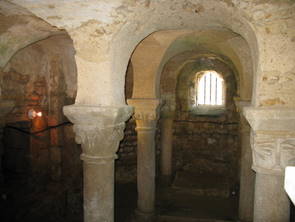
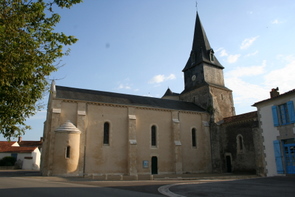
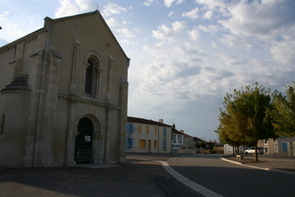
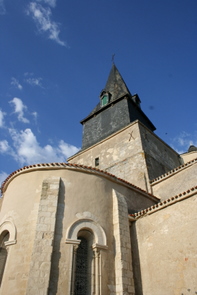
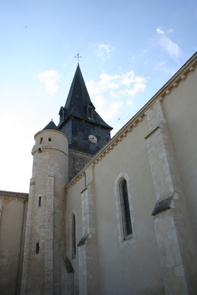
The church of Curzon was rebuilt in 1873 on the site of earlier churches that dated back to the 10th century. The present church has one treasure which is its crypt, ignored for centuries it was indicated in writings from l'Abbeye Aillery in 1850, it was rediscovered in 1861 when work to dig it out and restore it began. A small pair of wooden doors on the floor in front of the altar opens up a staircase that leads down to a vaulted nave held up by 4 sculptured capitals in the centre and 10 columns built into the walls. There is also an original and unique window to the crypt.
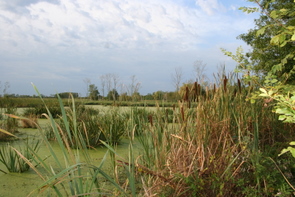
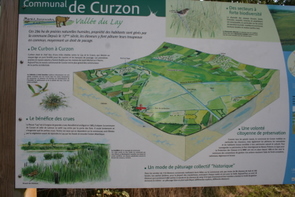
The Commons. On the Marais below the village is an original commons pasture. The two hundred and ninety four hectare commons is the largest of ten that exist on the Marais Poitevin in the Vendée. The commons have been part of the Marais since the 12th century and allow residents to graze their cattle, horses and geese freely on these humid marshlands.
Besides being a common grazing land the area is exceptional for its natural beauty and its diverse flora and fauna.
Photo gallery for Curzon.
St.Benoist. It is a couple of kilometres further along the D46 and is another ancient village on the old coast line of the Vendée
Port de la Claye. On the road from Lucon is a turn off of the D949 into the small commune of Port de la claye, this ancient port on the River Lay was a river crossing point for the Romans and one can still see the old bridge that crossed the river. The road has been straightened and a newer bridge now crosses at this point. The pretty village is typical of many villages exhibiting characteristics of when the old coastline was, up until the middle ages, on their doorstep.
Return to find more interesting towns and villages in the Vendee
The church of Curzon was rebuilt in 1873 on the site of earlier churches that dated back to the 10th century. The present church has one treasure which is its crypt, ignored for centuries it was indicated in writings from l'Abbeye Aillery in 1850, it was rediscovered in 1861 when work to dig it out and restore it began. A small pair of wooden doors on the floor in front of the altar opens up a staircase that leads down to a vaulted nave held up by 4 sculptured capitals in the centre and 10 columns built into the walls. There is also an original and unique window to the crypt.
The Commons. On the Marais below the village is an original commons pasture. The two hundred and ninety four hectare commons is the largest of ten that exist on the Marais Poitevin in the Vendée. The commons have been part of the Marais since the 12th century and allow residents to graze their cattle, horses and geese freely on these humid marshlands.
Besides being a common grazing land the area is exceptional for its natural beauty and its diverse flora and fauna.
Photo gallery for Curzon.
St.Benoist. It is a couple of kilometres further along the D46 and is another ancient village on the old coast line of the Vendée
Port de la Claye. On the road from Lucon is a turn off of the D949 into the small commune of Port de la claye, this ancient port on the River Lay was a river crossing point for the Romans and one can still see the old bridge that crossed the river. The road has been straightened and a newer bridge now crosses at this point. The pretty village is typical of many villages exhibiting characteristics of when the old coastline was, up until the middle ages, on their doorstep.
Return to find more interesting towns and villages in the Vendee
In
accordance with the law "and Freedoms" of January 6, 1978, you have the
right to access and rectify information concerning you. If you wish to
exercise this right, please contact us.
© Copyright Vendee-Guide.co.uk 2009-12 This Website is built with Bluevoda from Vodahost
© Copyright Vendee-Guide.co.uk 2009-12 This Website is built with Bluevoda from Vodahost