
Tourist Information, Vendee History, Accommodation, Photos, Reviews, Maps,

Custom Search
Web |



|
| contact us | ||
| Advertise |
|
| month by month guide | ||
| Entertainment |
| January | ||
| February | ||
| March | ||
| April | ||
| May | ||
| June | ||
| July | ||
| August | ||
| September | ||
| October | ||
| November | ||
| December |
| Car Boot Sale | ||
| Discos |
|
| Getting About | ||
| Public Holidays, | ||
| Getting to the Vendee | ||
| Bike Hire | ||
| Photos | ||
| Weather | ||
| Vendee Wars | ||
| Videos | ||
| Maps & Books | ||
| Vendee Wines | ||
| Vendee Information |
|
| Vendee Restaurants | ||
| Coastal Region | ||
| Haut Bocage | ||
| Bas Bocage | ||
| Plaine | ||
| Sud Vendee | ||
| Marais Poitevin | ||
| Marais Breton | ||
| Marais Olonne |
|
| All Activities | ||
| fishing | ||
| sailing | ||
| golf | ||
| Walking | ||
| Cycling | ||
| Surfing | ||
| Karting | ||
| Swimming | ||
| Canoeing | ||
| Paintball | ||
| Horse Riding | ||
| Adventure Parks | ||
| Arts & Crafts |
|
| All Attractions | ||
| Theme Parks | ||
| Towns and Villages | ||
| Chateaux and Churches | ||
| beaches of the vendee | ||
| Adventure Parks | ||
| Amusement Parks | ||
| Water Parks | ||
| Childrens Attractions | ||
| Markets | ||
| Zoos & Gardens | ||
| Museums | ||
| Rivers of the Vendee | ||
| Vendee Islands | ||
| Vendee Wars Sites | ||
| Mills of the Vendee |
| inland beaches |
|
| Gites | ||
| Hotels | ||
| Camping | ||
| Bed & Breakfast |
| Gites with Pools | ||
| Gites Complex | ||
| All Gites |
| Camping Coastal Region | ||
| Camping Haut Bocage | ||
| Camping Marais Poitevin | ||
| Camping Sud Vendee |
|
| Coastal Region | ||
| Bas Bocage | ||
| Haut Bocage | ||
| Plaine | ||
| Sud Vendee | ||
| Marais Poitevin | ||
| Marais Breton | ||
| Marais Olonne | ||
| Mervent Forest |
Coulon Deux Sèvres
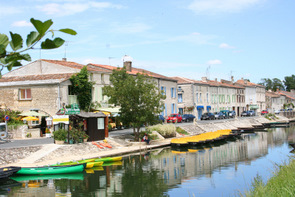
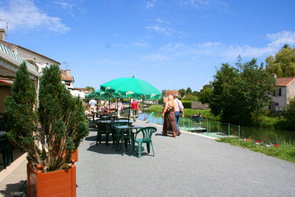
This large village just inside the Deux Sèvre Department on the River Sèvre-Niortaise
is listed as one of the prettiest villages in France, and it will not
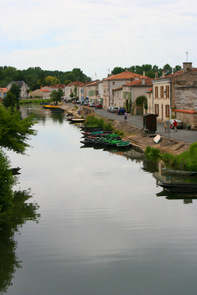
take you long to see why. The village has great character and charm with
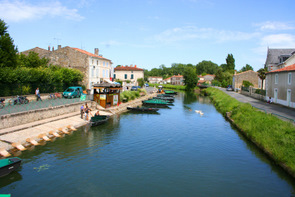
its busy waterside frontage lined with restaurants, shops and quaint
fishermen's houses. Everywhere there are painters eager to capture the
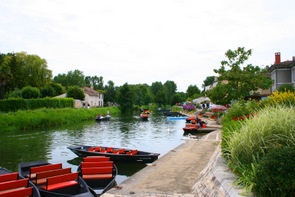
charm and colours of this delightful village. From alongside the quay
one can hire the traditional flat bottomed boats called "plates" with or
without a guide. Canoes and kayaks are also available for exploring the
tree-lined canals that branch off the main river.
Coulon is the capital of the Green Venice (Venice-Vert) which is the north eastern end of the Marais Mouille (Wet Marshes), which itself is a part of the Marais Poitevin, the second largest wetland in France. In 869 it was known as Colunus and there was a Gallo-Roman cemetery about 800m north from the village on the edge of the Roman way to Angers. In 1868 near the old roman ford, 2 Celtic dugouts were discovered, and in 1883 three Gallo-Roman sarcophagi were unearthed together with 4 small bronzes of Emperor Constantine (306-337). Further roman artefacts were found at nearby Oulmes and can be seen in the church.
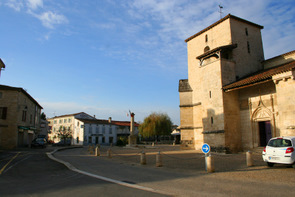
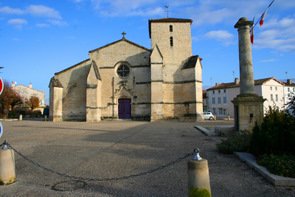
The Centre of the village is dominated by the church of St.Trinity, which was founded in 830 by the monks of Charroux and took on the name of St Sauvier in the X11 century. Earlier in the 9th Century it had been called the Holy Trinity, and was ransacked by the Normans and then rebuilt in the X1 century in Romanesque style. It was further restored in the XV century, when the southern nave and side door were remade in the Ogival Style. The Protestants set fire to the church in 1569 and the bell tower had to be rebuilt in 1671.
Maison des Marais Mouilles. In this museum, housed in the old Customs House where taxes were collected for the transport of goods, one can discover the history of the wet marshes from pre-historic times, through the periods of the draining of the marshes by the monks and later the Dutch up to and including modern times. There are also sections on local industries like; wood, fishing and farming as well as the ecology of the marshlands.
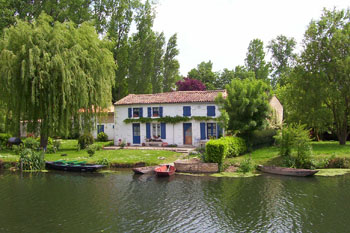
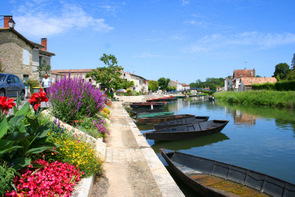
Coulon is an ideal location to start to discover this intriguing area, whether one chooses to explore by boat, on a bike, walking or for the less mobile by car. Along the way one will encounter charming cottages by the riverside, a dazzling array of flora and fauna, much of which is rare and native to the marshes, but above all one will discover the tranquillity that makes these lands so special.
Images of Coulon
Return to find more interesting towns and villages in the Vendee
Coulon is the capital of the Green Venice (Venice-Vert) which is the north eastern end of the Marais Mouille (Wet Marshes), which itself is a part of the Marais Poitevin, the second largest wetland in France. In 869 it was known as Colunus and there was a Gallo-Roman cemetery about 800m north from the village on the edge of the Roman way to Angers. In 1868 near the old roman ford, 2 Celtic dugouts were discovered, and in 1883 three Gallo-Roman sarcophagi were unearthed together with 4 small bronzes of Emperor Constantine (306-337). Further roman artefacts were found at nearby Oulmes and can be seen in the church.
The Centre of the village is dominated by the church of St.Trinity, which was founded in 830 by the monks of Charroux and took on the name of St Sauvier in the X11 century. Earlier in the 9th Century it had been called the Holy Trinity, and was ransacked by the Normans and then rebuilt in the X1 century in Romanesque style. It was further restored in the XV century, when the southern nave and side door were remade in the Ogival Style. The Protestants set fire to the church in 1569 and the bell tower had to be rebuilt in 1671.
Maison des Marais Mouilles. In this museum, housed in the old Customs House where taxes were collected for the transport of goods, one can discover the history of the wet marshes from pre-historic times, through the periods of the draining of the marshes by the monks and later the Dutch up to and including modern times. There are also sections on local industries like; wood, fishing and farming as well as the ecology of the marshlands.
Coulon is an ideal location to start to discover this intriguing area, whether one chooses to explore by boat, on a bike, walking or for the less mobile by car. Along the way one will encounter charming cottages by the riverside, a dazzling array of flora and fauna, much of which is rare and native to the marshes, but above all one will discover the tranquillity that makes these lands so special.
Images of Coulon
Return to find more interesting towns and villages in the Vendee
In
accordance with the law "and Freedoms" of January 6, 1978, you have the
right to access and rectify information concerning you. If you wish to
exercise this right, please contact us.
© Copyright Vendee-Guide.co.uk 2009-12 This Website is built with Bluevoda from Vodahost
© Copyright Vendee-Guide.co.uk 2009-12 This Website is built with Bluevoda from Vodahost