
Tourist Information, Vendee History, Accommodation, Photos, Reviews, Maps,

Custom Search
Web |



|
| contact us | ||
| Advertise |
|
| month by month guide | ||
| Entertainment |
| January | ||
| February | ||
| March | ||
| April | ||
| May | ||
| June | ||
| July | ||
| August | ||
| September | ||
| October | ||
| November | ||
| December |
| Car Boot Sale | ||
| Discos |
|
| Getting About | ||
| Public Holidays, | ||
| Getting to the Vendee | ||
| Bike Hire | ||
| Photos | ||
| Weather | ||
| Vendee Wars | ||
| Videos | ||
| Maps & Books | ||
| Vendee Wines | ||
| Vendee Information |
|
| Vendee Restaurants | ||
| Coastal Region | ||
| Haut Bocage | ||
| Bas Bocage | ||
| Plaine | ||
| Sud Vendee | ||
| Marais Poitevin | ||
| Marais Breton | ||
| Marais Olonne |
|
| All Activities | ||
| fishing | ||
| sailing | ||
| golf | ||
| Walking | ||
| Cycling | ||
| Surfing | ||
| Karting | ||
| Swimming | ||
| Canoeing | ||
| Paintball | ||
| Horse Riding | ||
| Adventure Parks | ||
| Arts & Crafts |
|
| All Attractions | ||
| Theme Parks | ||
| Towns and Villages | ||
| Chateaux and Churches | ||
| beaches of the vendee | ||
| Adventure Parks | ||
| Amusement Parks | ||
| Water Parks | ||
| Childrens Attractions | ||
| Markets | ||
| Zoos & Gardens | ||
| Museums | ||
| Rivers of the Vendee | ||
| Vendee Islands | ||
| Vendee Wars Sites | ||
| Mills of the Vendee |
| inland beaches |
|
| Gites | ||
| Hotels | ||
| Camping | ||
| Bed & Breakfast |
| Gites with Pools | ||
| Gites Complex | ||
| All Gites |
| Camping Coastal Region | ||
| Camping Haut Bocage | ||
| Camping Marais Poitevin | ||
| Camping Sud Vendee |
|
| Coastal Region | ||
| Bas Bocage | ||
| Haut Bocage | ||
| Plaine | ||
| Sud Vendee | ||
| Marais Poitevin | ||
| Marais Breton | ||
| Marais Olonne | ||
| Mervent Forest |
Cugand
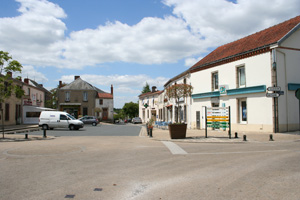
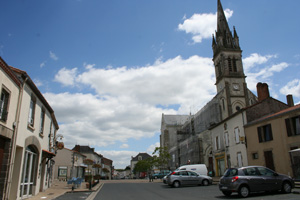
Cugand is situated in the North Eastern corner of the Vendée, in the Haut bocage close to the border with the Loire Atlantic and only three kilometres south of Clissons.
It was the first industrial centre in the Vendée having over one
hundred mills, factories and workshops carrying out the main trades such
as milling wheat, papermaking, woollen trades and tanning along with
many other associated trades.
Cugand was made famous in the early 1960's when Serge Danot created one of the first animation films for TV it was the now famous "Magic Roundabout" which was filmed in the Italian style factory at Le Feuilleein. In all eight hundred episodes were made. The Camera used and some of the puppets are on display at the Historial de la Vendée at Les-Lucs-sur Boulogne.
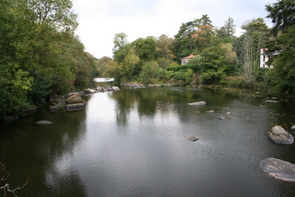
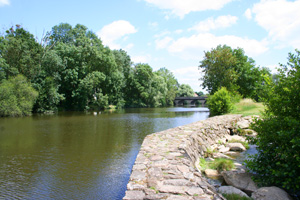
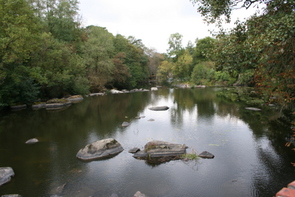
The valley of the River Sèvre-Nantaise forms one of the prettiest landscapes in the Vendée, it was here at Plessard in 2004 that le Chemin Vendée, a composite of lanes that join to form a walkway around the Vendée, was started.
Restaurants in Cugand: Le Belle Epoque. 8 place Eglise. Tel. 02 51 43 65 47.
Le Ralais de cugand. 3,Place Eglise. Tel. 02 51 42 15 48
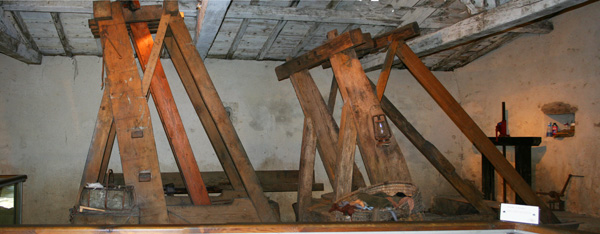
Le Moulin a Foulan. This is the last woollen mill that is active in the whole of France . In the mill one can discover five hundred years of memories in the woollen trade. The site not only includes the water driven mill where the wool was hammered and treated and includes photos and equipment used, but also the dying shop where the colours were added, the laundry where the wool was washed and teased with Teasels that are grown in the nearby fields and finally the drying plant where the wools where dried ready for weaving.
It is open in the summer season from 1st June to 15th September from 10am - 12noon & from 3pm to 7pm. Admission is free.
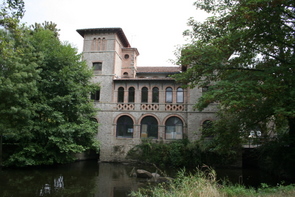
Other mills along the river can be seen at Plessard, it was originally for grinding wheat and was rebuilt in 1815 in the Italian style, and was later used as a tannery. Today the upper part of the mill is used for lodgings while the lower part is used as a base for canoeing.
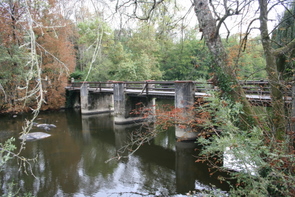
The Bridge at Fougues was built in 1740 on the site of a roman crossing, the mill here dates from 1522.
Gaumier Mill dates from 1522 and was a woollen mill which only stopped working 30 years ago.
Antieres Mill was used for paper making and only closed in 1934.
Fradet Mill was used for grinding wheat and dates from 1503.
Hachelop. There are two mills here which date from 1522, (and) the tanning mill closed in 1985.
Return to find more interesting towns and villages in the Vendee
Cugand was made famous in the early 1960's when Serge Danot created one of the first animation films for TV it was the now famous "Magic Roundabout" which was filmed in the Italian style factory at Le Feuilleein. In all eight hundred episodes were made. The Camera used and some of the puppets are on display at the Historial de la Vendée at Les-Lucs-sur Boulogne.
The valley of the River Sèvre-Nantaise forms one of the prettiest landscapes in the Vendée, it was here at Plessard in 2004 that le Chemin Vendée, a composite of lanes that join to form a walkway around the Vendée, was started.
Restaurants in Cugand: Le Belle Epoque. 8 place Eglise. Tel. 02 51 43 65 47.
Le Ralais de cugand. 3,Place Eglise. Tel. 02 51 42 15 48
Le Moulin a Foulan. This is the last woollen mill that is active in the whole of France . In the mill one can discover five hundred years of memories in the woollen trade. The site not only includes the water driven mill where the wool was hammered and treated and includes photos and equipment used, but also the dying shop where the colours were added, the laundry where the wool was washed and teased with Teasels that are grown in the nearby fields and finally the drying plant where the wools where dried ready for weaving.
It is open in the summer season from 1st June to 15th September from 10am - 12noon & from 3pm to 7pm. Admission is free.
Other mills along the river can be seen at Plessard, it was originally for grinding wheat and was rebuilt in 1815 in the Italian style, and was later used as a tannery. Today the upper part of the mill is used for lodgings while the lower part is used as a base for canoeing.
The Bridge at Fougues was built in 1740 on the site of a roman crossing, the mill here dates from 1522.
Gaumier Mill dates from 1522 and was a woollen mill which only stopped working 30 years ago.
Antieres Mill was used for paper making and only closed in 1934.
Fradet Mill was used for grinding wheat and dates from 1503.
Hachelop. There are two mills here which date from 1522, (and) the tanning mill closed in 1985.
Return to find more interesting towns and villages in the Vendee
In
accordance with the law "and Freedoms" of January 6, 1978, you have the
right to access and rectify information concerning you. If you wish to
exercise this right, please contact us.
© Copyright Vendee-Guide.co.uk 2009-12 This Website is built with Bluevoda from Vodahost
© Copyright Vendee-Guide.co.uk 2009-12 This Website is built with Bluevoda from Vodahost